The 2026 cold email deliverability checklist (SPF, DKIM, DMARC, warmup)
June 15, 2026 · 6 min read · by Ahmet Faruk Yilmaz, Founder of Asphia
TL;DR
Deliverability is not luck. SPF, DKIM, and a p=reject DMARC record, plus warmed inboxes and one domain per brand, decide whether your cold email lands in the inbox or spam.
Most cold email never gets read because it never reaches the inbox. We run cold email across five languages, and the single biggest lever on reply rate is not copy. It is deliverability. Get SPF, DKIM, DMARC, and warmup right and your open rate doubles before you change a word.
Here is the exact checklist we run before any campaign goes live.
Why deliverability is the whole game in 2026
In February 2024 Google and Yahoo started enforcing sender requirements for bulk mail. By 2026 that enforcement is the floor, not the ceiling. Microsoft tightened its own rules for high-volume senders. Unauthenticated mail does not land in spam anymore. It gets rejected at the gateway, and you never see the bounce as a real human reading your offer. Google’s Email sender guidelines and Microsoft’s Sender support documentation both publish the exact requirements.
The math is simple. If 40% of your sends land in spam, you have cut your pipeline in half before the prospect makes a single decision. No subject line fixes a domain that is not authenticated.
So we treat the technical setup as the product. Copy comes second.
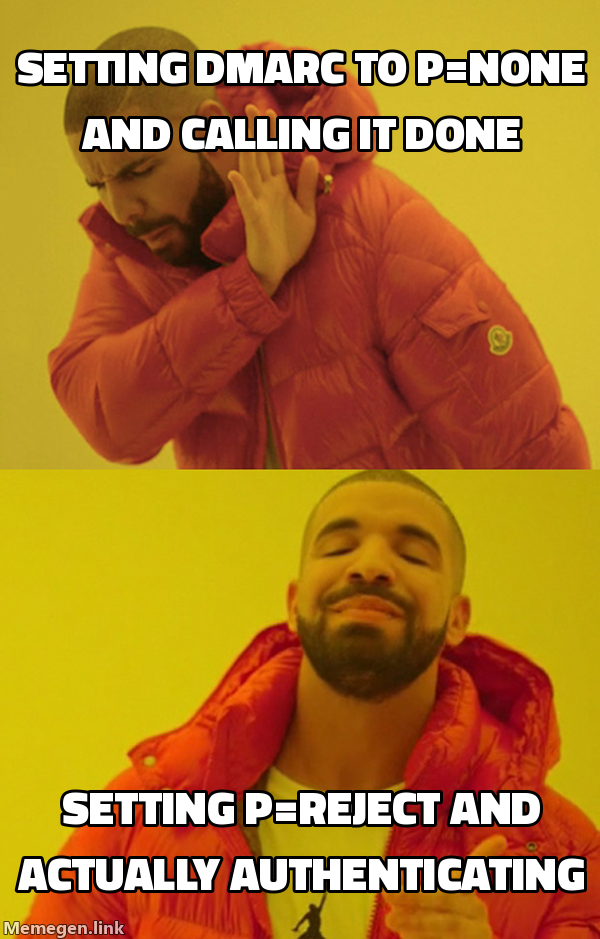 Setting p=none is not DMARC. It is just watching your domain get spoofed politely.
SPF, DKIM, DMARC explained in plain terms
These three records tell receiving servers that you are allowed to send on behalf of your domain. Skip one and you look like a spoofer.
| Record | What it proves | Where it lives | Common failure |
|---|---|---|---|
| SPF | Which servers may send for your domain | TXT record in DNS | More than 10 DNS lookups, record voided |
| DKIM | The message was not tampered with in transit | TXT record with a public key | Key not published for the sending platform |
| DMARC | What to do when SPF or DKIM fails | TXT record at _dmarc | Left at p=none, so nothing is enforced |
SPF: authorize your senders
SPF is a list of servers allowed to send for your domain. The trap is the 10-lookup limit. Every include: in your record counts, and chaining Google, your sending tool, and a few others blows past 10 fast. When that happens the record returns permerror and is treated as if it does not exist.
- Keep total DNS lookups under 10. Flatten if needed.
- Include only the platforms that actually send: your inbox provider and your sending tool.
- End the record with
~all(softfail) or-all(hardfail). We use-allon cold domains.
DKIM: sign every message
DKIM attaches a cryptographic signature so the receiver can verify the message was not altered. Most platforms generate a 2048-bit key and hand you the DNS record. Publish it. Then send a test and confirm the header shows dkim=pass.
- Use a 2048-bit key, not 1024.
- Publish the exact selector your platform gives you.
- Verify pass status in the raw headers, not just the platform dashboard.
DMARC: enforce the policy
DMARC ties SPF and DKIM together and tells receivers what to do on failure. Most senders set p=none and call it done. That tells the world to do nothing. It authenticates nothing in practice.
- Start at
p=nonefor one week only, to collect reports. - Move to
p=quarantine, then top=rejectonce your aligned pass rate is clean. - Add a
rua=address so you actually read the aggregate reports.
A DMARC record at p=reject with aligned SPF and DKIM is the 2026 baseline. Anything weaker is a guess.
The warmup protocol that actually works
A new inbox with zero history looks identical to a spam operation. Warmup builds a sending reputation slowly so the mailbox provider learns to trust you.
Here is the protocol we run on every new inbox:
- Weeks 1 to 2: enroll in an automated warmup network. Let it send and reply to a pool of real inboxes, building positive engagement signals.
- Week 3: begin light live sends, 5 to 10 per inbox per day, mixed with continued warmup traffic.
- Week 4: ramp to a steady ceiling. We cap at 30 to 40 cold sends per inbox per day and never push higher.
Rules we never break:
- One inbox, one job. Do not send 200 emails a day from one mailbox. Use more mailboxes instead.
- Keep warmup running underneath live campaigns at a reduced rate. Reputation decays if you stop.
- Watch the reply rate and spam-complaint rate per inbox. Pull any inbox that drifts.
Warmup is not a one-time event. It is a baseline load you keep running for the life of the inbox.
Domain and infrastructure rules
The technical records matter, but the architecture around them matters just as much. This is where most teams quietly burn their main domain.
Never send cold from your primary domain
A single wave of spam complaints can tank your primary domain reputation, and that domain also carries your invoices, your contracts, and your team’s real mail. We never risk it.
- Buy separate sending domains. Lookalikes of your brand work well, for example getbrand.com or trybrand.io.
- Redirect each sending domain to your real site with a 301, so clicks resolve cleanly.
- Spread volume across multiple domains and multiple inboxes per domain.
Keep the technical hygiene tight
- Set up a custom tracking domain. The shared default tracking domain from your tool is shared with every other spammer on it.
- Add an MX record and a reverse DNS entry so the domain looks like a real mailbox, not a throwaway.
- Add a simple website and a few real pages. An empty domain is a red flag.
Match infrastructure to volume
If you need 1,000 sends a day, you do not need one heroic mailbox. You need roughly 25 to 35 inboxes at 30 to 40 sends each, spread across several domains. This is the part most founders underbuy. The infrastructure cost is small compared to the pipeline you lose to spam folders.
The tools we actually run
We are tool-agnostic, but here is the stack we trust in 2026.
- Sending and warmup: Smartlead and Instantly both handle inbox rotation and automated warmup well. Manyreach and Sendkit cover the campaign and sequence layer.
- Data and enrichment: Apollo for raw data, Clay enrichment for enrichment and verification before a single send.
- Verification: always verify every list before sending. A 5% bounce rate is the line. Cross it and providers throttle you.
The principle behind the stack: verify the list, authenticate the domain, warm the inbox, then send. In that order. Every campaign, no exceptions.
The 60-second pre-send checklist
Run this before any campaign goes live. If any line fails, do not send.
- SPF record present, under 10 lookups, ends in
-allor~all. - DKIM published with a 2048-bit key, headers show
dkim=pass. - DMARC at
p=rejectorp=quarantinewith arua=reporting address. - Sending domain is separate from your primary domain, with a 301 redirect.
- Custom tracking domain configured, not the shared default.
- Every inbox warmed for at least 3 weeks, capped at 30 to 40 sends per day.
- List verified, bounce rate projected under 5%.
Authentication and warmup are not the boring part of cold email. They are the part that decides whether anyone ever reads your offer. If you want this infrastructure built and managed for you, our done-for-you cold email service handles every layer from domain setup to warmup to rotation.
Get the signal tier list in your inbox.
We rank signals from S to D to decide who gets a cold email and who does not. You get the list once. No follow-up emails.
Request received. The list lands in your inbox within 24 hours.
One more step: send the prepared request to [email protected]
FAQ
Do I need SPF, DKIM, and DMARC for cold email in 2026?
Yes. Google and Microsoft now reject or spam unauthenticated bulk mail, so all three are required, not optional.
How long does inbox warmup take before I can send cold email?
Plan for 3 to 4 weeks of warmup before live sends, ramping each inbox to a steady ceiling of 30 to 40 emails per day.
Should I send cold email from my main company domain?
No. Use separate lookalike domains with redirects so a spam complaint never touches your primary domain reputation.
How many cold emails can I safely send per inbox per day?
Cap each warmed inbox at 30 to 40 cold sends per day. Pushing higher spikes complaint rates and trains mailbox providers to filter you. If you need more volume, add more inboxes across additional lookalike domains rather than squeezing more from one address.
What does DMARC p=reject actually do for cold email senders?
It tells receiving servers to silently drop any message that fails SPF or DKIM alignment, which stops spoofers from sending mail that looks like it comes from your domain. It also signals to Gmail and Microsoft that you take authentication seriously, which is a positive reputation signal for your sending infrastructure.
How do I know if my cold email is landing in spam instead of the inbox?
Send test messages to seed accounts at Gmail, Outlook, and Google Workspace using a tool like GlockApps or MailReach, then check placement before each campaign. Also monitor your reply rate: a sudden drop with no copy change is almost always a deliverability regression, not a messaging problem.

Ahmet Faruk Yilmaz
Founder of Asphia. He builds and runs signal-based B2B outbound engines for lean teams, and has booked meetings with teams at companies across five markets. Writes about cold email, Clay, deliverability, and GTM engineering.
Want this run for you?
Get a free GTM analysis. We show you the exact engine we would build.
Get your free GTM analysis →