Intent Data for Cold Email: What It Is, What to Buy, and How to Actually Use It
April 8, 2026 · 5 min read · by Ahmet Faruk Yilmaz, Founder of Asphia
TL;DR
Intent data tells you which companies are actively researching a problem you solve. The best cold emails combine third-party intent signals (topic surges, job postings, funding) with first-party triggers (website visits, ad engagement) to send the right message at the exact moment a prospect is in-market.
Intent data for cold email in B2B is simple in principle: reach out to companies that are already researching the problem you solve, and reference the signal that told you so. The difficulty is knowing which data is worth buying, how to layer it into copy, and how to avoid sending irrelevant noise at scale.
What Intent Data Actually Means
Intent data describes observable behavioral signals suggesting a company is actively evaluating a category of solution. The most commonly cited source is Bombora, which aggregates content consumption across thousands of B2B publishing sites and surfaces “topic surges” when a company is reading far more than baseline about a given subject.
But intent is broader than that. Any signal that reliably predicts a buying window qualifies:
- A company posts three SDR roles in sixty days (budget allocated, outbound motion being built)
- A Series B closes, meaning a new CFO will scrutinize the tech stack
- A G2 Buyer Intent alert fires showing the company researched your exact category
- A contact changes jobs, entering a role where they will evaluate vendors
The value of intent data is timing. A cold email to a company with no buying trigger is a lottery ticket. The same email to a company mid-evaluation is a conversation starter.
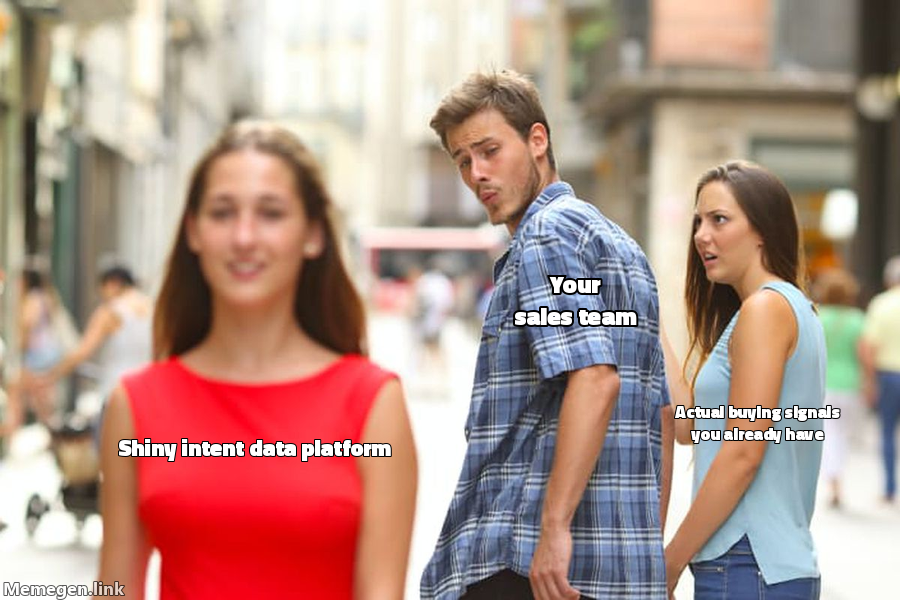 The signals worth acting on are usually hiding in plain sight.
Which Signals Are Worth Paying For
Not all intent data delivers equal ROI. Here is how to think about the tiers, from cheapest to most expensive.
Free or near-free signals (start here): Job postings on LinkedIn and Apollo reveal hiring direction and budget allocation. A company hiring a “VP of Revenue Operations” is probably buying new stack. Funding announcements (Crunchbase, TechCrunch) surface companies with fresh budget. Tech install data from Clearbit or BuiltWith shows what stack a company runs, which tells you where to pitch a replacement or add-on.
Mid-tier signals: LinkedIn engagement signals (followers of competitors, recently active in relevant groups) can be captured manually or through tools like PhantomBuster. G2 and TrustRadius buyer intent packages show which companies are researching your software category, but these require direct contracts with the review platforms and are priced accordingly.
Premium intent layers: Bombora topic-level intent and similar aggregators (Aberdeen, TechTarget Priority Engine) are powerful for enterprise accounts with large TAMs. At this price point, ROI depends on deal size and conversion rates. If your average contract is five figures, a few extra conversions easily justify the annual spend. If you are selling a mid-market SaaS product, start with free signals first.
For most B2B teams, the highest-leverage starting point is hiring signals plus funding events, combined with first-party website visitor identification (tools like Clearbit Reveal or RB2B for US visitors). This combination is either free or very low cost and already outperforms generic cold outreach.
How to Write Cold Email Copy with Intent Data
The signal has to appear in the copy, not just in your targeting filter. Filtering to intent-matched companies and then sending a generic email wastes the data.
A simple formula that works: open with the trigger, bridge to the problem it implies, offer a specific relevant outcome.
Example structure using a hiring signal:
“Saw you are building out an SDR team (three roles posted this month). Most teams at that stage spend the first quarter figuring out which accounts to prioritize before anyone picks up the phone. We build the targeting layer first, so by the time your hires start, they have a qualified list and a tested sequence. Worth a quick look?”
The opener is specific. It earns attention because it shows awareness. The rest of the email only makes sense given that context. Generic lines like “I noticed your company is growing” do not achieve this because they apply to anyone.
For more on writing copy that does not get ignored, the signal-based outreach framework covers the full methodology, and done-for-you cold email explains how Asphia operationalizes this across campaigns.
Layering Intent into a Sequenced Campaign
Intent data is most powerful when it gates entry into a sequence rather than replacing the sequence. The workflow looks like this:
- Pull a list of companies matching your ICP from Apollo or a similar source.
- Enrich with a hiring-signal or funding filter to identify the in-market subset.
- Use Clay enrichment to pull specific signal details (job title of the hire, round size, date).
- Pass those fields into your email tool as personalization variables.
- Send the intent-triggered email as step one of a three to four step sequence. Later steps can revert to value-based messaging if the trigger is no longer the right hook.
This approach keeps the human approval gate intact. At Asphia, a human reviews every send before it goes out, which matters especially when copy references external data that could be stale or miscategorized.
A Note on GDPR and Company-Level vs. Individual Tracking
If you are running outbound into Europe, the data layer matters for compliance. Third-party intent data aggregated at the company level (Bombora topic surges, for example) is generally lower risk than individual-level behavioral tracking because no personal data is being processed. The email you send is still outbound B2B communication, which in most EU jurisdictions is permissible under the legitimate interests basis when targeting business email addresses in a relevant professional context.
First-party intent data (your own website visitors via IP identification) requires care. Identify companies, not individuals, and make sure your cookie consent and privacy policy reflect what you collect.
For a full breakdown of compliant outbound in Europe, GDPR-compliant cold email covers the legal framework in detail.
What to Do This Week
If you are not yet using intent data, the fastest path to improvement is:
- Set up a free Apollo account and add a hiring-signal filter to your ICP search.
- Pull a list of fifty companies with relevant recent hires.
- Write one email template referencing the hiring signal specifically.
- Send manually or through your sequencer, track reply rates for two weeks.
If that experiment shows lift over your baseline, you have a clear case for investing in richer intent layers. Start simple, prove the concept, then scale the data spend.
For teams that want the full stack built and running without the setup time, outbound engine builder explains the infrastructure we put in place in the first seven days.
Get the signal tier list in your inbox.
We rank signals from S to D to decide who gets a cold email and who does not. You get the list once. No follow-up emails.
Request received. The list lands in your inbox within 24 hours.
One more step: send the prepared request to [email protected]
FAQ
What is intent data in B2B sales?
Intent data is behavioral information showing which companies are actively researching topics related to your solution. It includes signals like content consumption on review sites, keyword search surges, job postings, and funding events, all of which indicate a prospect may be in-market for a purchase.
How do you use intent data for cold email?
You layer intent signals into your cold email copy as a specific, relevant hook. Instead of a generic opener, you reference the trigger directly, for example mentioning a recent funding round or a role they just posted. This relevance lifts reply rates because the email arrives when the problem is already top of mind.
What are the best intent data providers for cold email?
Common providers include Bombora (topic-level B2B intent), G2 and TrustRadius (buyer-research intent on software categories), Apollo (job posting and hiring signals), and LinkedIn (engagement and follower signals). The right choice depends on your target market, budget, and the signal types that best predict buying behavior in your niche.
Is intent data GDPR compliant?
It depends on the provider and signal type. Third-party intent data aggregated at the company level (not personal behavioral tracking) generally carries lower GDPR risk. First-party signals from your own website require a lawful basis. Always verify your provider's data collection practices and use company-level signals wherever possible in EU outreach.
How much does intent data cost?
Pricing ranges widely. Entry-level access to job posting signals via Apollo or LinkedIn can be near zero if you already have seats. Bombora or G2 Buyer Intent at the company level typically runs into thousands per month on annual contracts. Many teams start with free or near-free signals (funding, hiring, tech installs) before investing in premium intent layers.
What is the difference between intent data and trigger-based outreach?
Intent data is a subset of triggers. Triggers include any observable event: a job posting, a funding round, a product launch. Intent data specifically refers to behavioral signals showing research activity, like a company visiting multiple G2 pages for your category or consuming multiple blog posts on a topic. Both feed the same cold email personalization engine.

Ahmet Faruk Yilmaz
Founder of Asphia. He builds and runs signal-based B2B outbound engines for lean teams, and has booked meetings with teams at companies across five markets. Writes about cold email, Clay, deliverability, and GTM engineering.
Want this run for you?
Get a free GTM analysis. We show you the exact engine we would build.
Get your free GTM analysis →