LinkedIn Automation Safe Limits in 2026: Invites, Messages, and Account Safety
November 6, 2025 · 5 min read · by Ahmet Faruk Yilmaz, Founder of Asphia
TL;DR
In 2026, safe LinkedIn automation means sending no more than 15 to 20 connection invites per day, keeping messages conversational rather than bulk-blasted, warming up gradually over two to four weeks, and always pairing automation with genuine engagement signals so LinkedIn's trust scoring sees you as a real user.
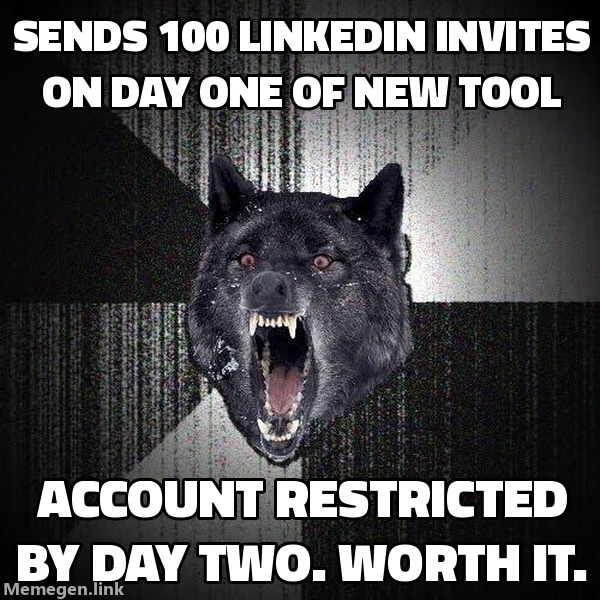
LinkedIn has tightened its automated activity detection every year since 2021, and 2026 is no different. The short answer: keep connection invites to 15 to 20 per day, warm up slowly, and always put a human in the loop before any message goes out. Accounts that respect those thresholds rarely get flagged. Accounts that blast 100 invites on day one almost always do.
Why LinkedIn Limits Have Become Stricter
LinkedIn’s trust model looks at behavioral signals, not just raw volume. The platform tracks how quickly you send invites, how often recipients hit “Ignore,” whether your profile is complete, your Social Selling Index, and how many of your recent connections have engaged with your content.
A sudden spike in any of those signals triggers a review. In recent years, LinkedIn has moved from hard weekly caps to dynamic per-account limits that adjust based on account age, engagement history, and whether the activity pattern looks human.
The practical result: a three-year-old account with a complete profile, regular posting, and a healthy accept rate can safely send more than a fresh account with no activity. There is no single universal number that applies to everyone.
 The warm-up phase is not optional. LinkedIn remembers everything.
Connection Invite Safe Limits
For most outbound use cases in 2026:
- New accounts (under six months old): 5 to 10 invites per day for the first two to four weeks, then gradually increase.
- Established accounts with low engagement: 15 to 20 per day as a steady-state ceiling.
- Accounts with high SSI and strong accept rates: up to 25 to 30 per day is often sustainable, but worth monitoring closely.
Withdraw pending invites that have gone unanswered for more than two to three weeks. A large queue of pending invites with no response is itself a negative signal.
Never send 100 invites on day one of using a new tool. The warm-up phase is not optional.
Message Limits and What to Avoid
Connection request messages (the note attached to an invite) are treated differently from InMail and follow-up DMs after connecting.
For notes on connection requests, keep them short (under 200 characters), personal, and never promotional. A note that reads like a sales pitch increases the ignore rate, and a high ignore rate triggers limits faster than volume alone.
For follow-up messages after connecting:
- Space them at least 48 to 72 hours apart.
- Do not send more than one or two touchpoints in a sequence before waiting for a signal.
- Avoid placeholder-looking copy. LinkedIn’s spam detection has gotten better at recognizing templated patterns.
If you are running a done-for-you outbound or managed outbound service, require that a human review every message template before it goes into rotation. Generic messages drive up the ignore rate, which is the fastest way to lose sending privileges.
Profile Views, Skills Endorsements, and Other Activity
Automation tools that simulate profile views, auto-endorse skills, or auto-follow large numbers of people carry their own risk. LinkedIn’s systems flag these signals separately from connection activity.
In practice, automated profile views are low-value anyway. The accounts that respond to “you appeared in X searches this week” are the exception. Focus your budget (tool cost, time, and risk tolerance) on connection requests and personalized follow-ups, not manufactured engagement signals.
The Human Approval Gate
This is the piece most automation playbooks leave out. Volume limits protect your account. Human review protects your reputation.
At Asphia, every LinkedIn sequence goes through a human approval gate before it runs. The automation handles the scheduling and the delivery. A person checks that the message is accurate, relevant, and worth the recipient’s time. That combination is what separates outbound that books meetings from outbound that gets ignored or reported.
If you are building this yourself, pair your LinkedIn tool with a simple approval queue (a Slack message, a Notion board, anything that requires a human to click “send”). If you want the system without the build time, that is what done-with-you outbound looks like in practice.
Coordinating LinkedIn With Cold Email
LinkedIn and cold email are stronger together than either is alone. A prospect who has seen your connection request and your name in their inbox is warmer than one who only received an email.
A practical multi-channel sequence might look like:
- Send a LinkedIn connection request with a brief, relevant note.
- On day three or four, send a cold email referencing a specific signal (a job post, a funding round, a piece of content they published).
- If they accept on LinkedIn, follow up in DM with one short message.
For teams building this kind of system, Clay enrichment handles the signal layer: finding the triggers that make each touchpoint feel timely rather than random.
The Compliance Angle
If you are reaching out to prospects in the EU, GDPR applies to LinkedIn outreach. LinkedIn profiles are public, but “publicly available” does not automatically mean “freely usable for marketing.” You need a documented legitimate interest basis, and your messages need to be relevant to the recipient’s professional role.
Outreach that is hyper-targeted to a person’s specific role, company stage, and a clear business signal is easier to justify under legitimate interest than a spray-and-pray campaign. That is also what makes it more likely to get a response. For more on building GDPR-native outbound, see our GDPR-compliant cold email agency overview.
The safest LinkedIn automation strategy in 2026 is not a specific number. It is a combination of gradual warm-up, realistic daily caps, high-quality targeting, and a human in the loop. Accounts that do those four things consistently rarely hit limits. Accounts that optimize purely for volume rarely avoid them.
Get the signal tier list in your inbox.
We rank signals from S to D to decide who gets a cold email and who does not. You get the list once. No follow-up emails.
Request received. The list lands in your inbox within 24 hours.
One more step: send the prepared request to [email protected]
FAQ
How many LinkedIn connection requests can I send per day safely in 2026?
Most practitioners stay between 15 and 20 per day for new or low-SSI accounts. Accounts with a strong history and high Social Selling Index can push closer to 30, but that is still well below the theoretical weekly ceiling LinkedIn has tightened repeatedly since 2021.
Does LinkedIn allow automation tools at all?
LinkedIn's Terms of Service prohibit automated scraping and mass messaging. However, many outbound teams use tools that mimic human cadence (randomized delays, daily caps, human review gates) and operate in a gray zone. The risk is account restriction, not legal liability, so limit management and human oversight matter most.
What happens if you exceed LinkedIn's automation limits?
LinkedIn can restrict your ability to send invites for days or weeks, add a CAPTCHA requirement, or in repeated cases permanently limit the account. Early warning signs include a banner saying invitations have been temporarily limited.
Is LinkedIn automation GDPR compliant?
Automation itself is not automatically a GDPR violation, but how you collect and use profile data matters. Processing personal data without a lawful basis (such as legitimate interest with a proper balancing test) creates risk. Always review your legal basis before any large-scale LinkedIn outreach in the EU.
What is the safest LinkedIn automation tool strategy in 2026?
Use a cloud-based tool that assigns a dedicated IP, randomize daily send counts between 10 and 20, warm up for at least two weeks, avoid sending generic messages, and have a human review each sequence before it goes live. Never connect your automation to a brand-new account.
Should I use LinkedIn automation or cold email for B2B outreach?
Both channels work best together. LinkedIn builds trust and warms the relationship; cold email scales volume and is easier to test. Running them in parallel with coordinated messaging often outperforms either channel alone.

Ahmet Faruk Yilmaz
Founder of Asphia. He builds and runs signal-based B2B outbound engines for lean teams, and has booked meetings with teams at companies across five markets. Writes about cold email, Clay, deliverability, and GTM engineering.
Want this run for you?
Get a free GTM analysis. We show you the exact engine we would build.
Get your free GTM analysis →