Cold Email Copywriting for Agencies Selling to Other Businesses: Angles That Actually Convert
January 12, 2026 · 5 min read · by Ahmet Faruk Yilmaz, Founder of Asphia
TL;DR
The best-converting cold emails from agencies lead with a specific signal about the prospect, make one clear claim, and ask for one small next step. Skip the capabilities pitch. Write like you already know their problem, because with the right data, you do.
The hard truth about cold email copywriting for agencies is that your prospects receive pitches from other agencies every week. Most of those pitches sound identical: “We help B2B companies book more meetings using our proven outbound system.” Delete.
The agencies that break through write copy that feels less like a pitch and more like a well-researched observation from someone who actually did their homework.
Start With a Signal, Not a Claim
The single biggest upgrade in agency cold email is replacing your opening claim with a specific signal about the prospect. A signal is any piece of recent, observable information that suggests they have the problem you solve.
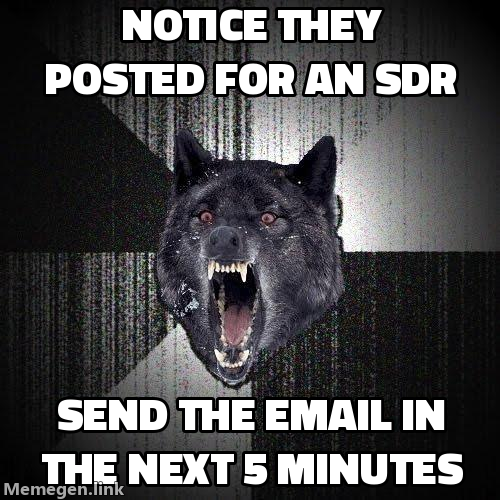 A hiring signal is a live buying signal. Stop overthinking it and send.
Examples of signals that work as openers:
- A job post for a Sales Development Representative (they are considering building outbound in-house)
- A funding announcement (they have budget and a growth mandate)
- A new VP of Sales or VP of Marketing hire (new leader, new priorities, window for change)
- A product launch or feature announcement (they are entering a new market)
Your opening line should name the signal and connect it to an outcome in one sentence. Something like: “Noticed you posted for an SDR last week, which usually means outbound is becoming a real priority.” That is it. No compliment, no “I hope this finds you well.”
This approach pairs naturally with intent-based data from tools like Clay and Apollo. If you want to go deeper on the data layer behind this, see how Clay enrichment service works in a modern outbound stack.
One Email, One Claim
After the signal hook, agencies make a common mistake: they try to communicate everything they can do. That is a proposal, not an email. One cold email should make one claim and support it with one piece of evidence or logic.
Pick the claim that matches the signal you led with. If they are hiring an SDR, your claim might be: “We build the same outbound system for a fraction of the cost and in about a week, with no headcount.” If they just launched in a new market, your claim might be: “We run multilingual outbound into [market] and have built sequences in four languages for teams entering the same space.”
The evidence does not need to be a case study with numbers. You can cite a method, a tool, or a specific observation. What you cannot do is invent data. No fabricated reply rates, no invented client names, no made-up revenue figures. Prospects check, and one false claim destroys the trust you were building.
For agencies specifically focused on cold email for agencies, the credibility signal comes from specificity, not from volume claims.
Structure That Keeps the Reader Moving
A four-part structure works reliably for agency outbound:
- Signal hook (one sentence, past tense, factual)
- Bridge (what that signal usually means for a company like theirs)
- Claim (what you do that is relevant to that situation)
- One small ask (a question, not a calendar link)
The ask at the end matters more than most people realize. “Would it make sense to explore this?” converts better than “Book a 30-minute call on my Calendly.” The question invites a yes or a no. The calendar link feels presumptuous.
Keep the entire email under 100 words in the body. If you cannot fit your pitch in 100 words, you have not done enough thinking about what actually matters to this prospect.
Follow-Ups That Add Value
Most replies come from follow-up emails, not the first touch. Each follow-up should shift the frame slightly rather than repeating the same message with “just following up.”
Follow-up one: a different angle on the same problem (for example, the cost of SDR ramp time versus an external system). Follow-up two: a specific resource or observation (a trend in their industry, a tool they might not know about). Follow-up three: a low-friction exit (a direct question about whether this is the right time).
If you are running this at scale, the sequence structure matters as much as the individual emails. Done for you cold email setups typically wire all of this into the sending platform so nothing requires manual tracking.
GDPR and Deliverability Are Not Optional
Agencies selling into European markets face legal requirements that American-market playbooks skip entirely. Processing contact data for outreach under GDPR requires a legitimate interest basis, a privacy notice, and an opt-out in every email. These are not nice-to-haves.
Beyond compliance, deliverability underpins everything. Your beautifully crafted copy means nothing if it lands in spam. Domain warming, inbox rotation, and sending-volume controls are infrastructure questions, not copywriting questions, but they directly affect whether your copy gets read. A GDPR-compliant cold email agency handles both the legal layer and the technical layer together.
What Actually Gets Replies
No invented data here: the pattern across high-performing agency outbound is consistent. Emails that reference something real and recent about the prospect outperform generic blasts. Emails under 100 words outperform longer ones. Emails that ask one question outperform those that push for a booking.
The craft is in the research layer upstream of the copy. When you know what signal you are working from before you write the first word, the email almost writes itself.
Get the signal tier list in your inbox.
We rank signals from S to D to decide who gets a cold email and who does not. You get the list once. No follow-up emails.
Request received. The list lands in your inbox within 24 hours.
One more step: send the prepared request to [email protected]
FAQ
What makes cold email copywriting for agencies different from other B2B copy?
Agencies sell trust and judgment, not software. Your copy has to demonstrate both in a few lines. Generic capability lists lose deals fast. The winning angle shows you understand the prospect's specific situation before you ever mention your service.
How long should a cold email from an agency be?
Under 100 words for the body. Decision-makers at target companies read on mobile between meetings. A tight email that earns a reply beats a thorough email that earns a scroll-past. Save the case studies for the follow-up or the call.
What should an agency cold email opening line look like?
It should reference something real and recent about the prospect: a new hire, a funding round, a job post, a published piece. That signal tells the reader you are not blasting a list. One sentence, past tense, factual, no compliments.
Should agencies include pricing in cold emails?
No. Pricing before context frames you as a vendor, not a partner. The goal of the cold email is one thing: a short conversation. Price comes after you understand their volume, stack, and timeline.
How many follow-ups should an agency send?
Three to four over two to three weeks is the standard. Each follow-up should add a new angle or a new piece of value, not just a 'just checking in' bump. A sequence that teaches something performs better than one that just reminds.
What subject lines work best for agency cold emails?
Short, specific, and without hype. Five words or fewer. Referencing the prospect's company name or a concrete outcome (meetings, pipeline, inbound) outperforms clever wordplay. Subject lines that look like a colleague sent them get opened.

Ahmet Faruk Yilmaz
Founder of Asphia. He builds and runs signal-based B2B outbound engines for lean teams, and has booked meetings with teams at companies across five markets. Writes about cold email, Clay, deliverability, and GTM engineering.
Want this run for you?
Get a free GTM analysis. We show you the exact engine we would build.
Get your free GTM analysis →