Cold Email for Consulting Firms: What Works When You Are Selling Expertise
February 11, 2026 · 5 min read · by Ahmet Faruk Yilmaz, Founder of Asphia
TL;DR
Cold email works for consulting firms when the message is built around a specific, observable problem the prospect already has, not a generic capabilities pitch. Signal-based triggers, short copy that proves credibility fast, and a low-friction call-to-action consistently outperform brochure-style emails.
Cold email for consulting firms is not the same problem as cold email for a SaaS product. You are not selling a trial or a free demo. You are selling trust in a person or a team, and that trust cannot be conveyed in a brochure-style pitch.
The firms that consistently book meetings through cold email do one thing differently: they write about the prospect’s situation before they write about themselves.
Why Most Consulting Cold Email Fails
The default consulting email reads like a capabilities deck compressed into a paragraph. It names the firm, lists service lines, drops a few client logos (or vague claims about them), and ends with “would love to connect.”
This format fails because it puts the burden of relevance entirely on the reader. The prospect has to mentally map your capabilities onto their current problem. Most will not do that work.
The fix is to invert the structure. Start with the problem you have observed in their specific context, then earn the right to introduce yourself.
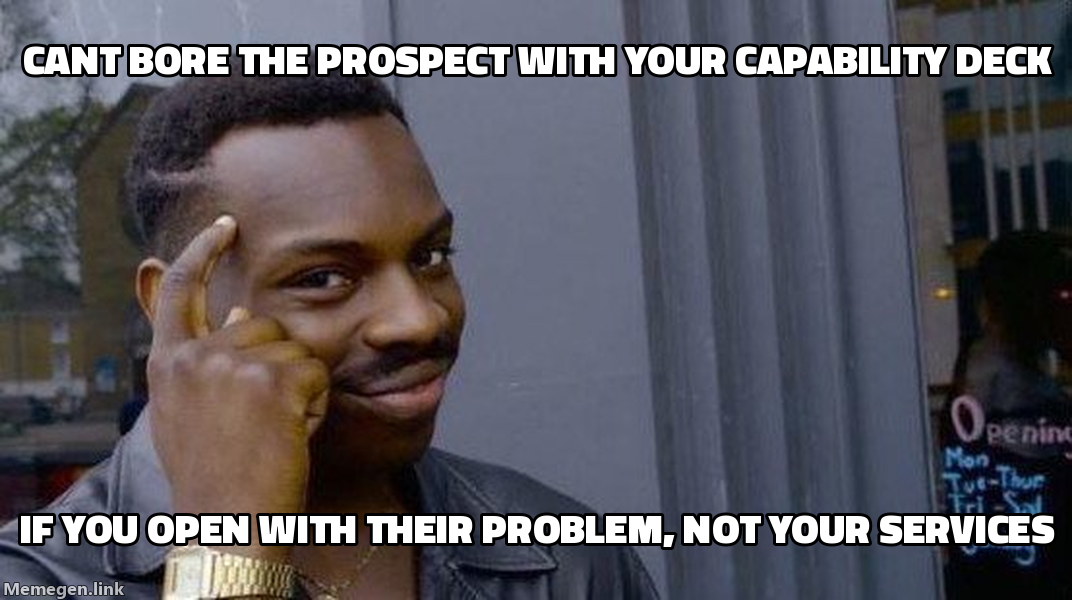 Lead with their situation, not your service lines. The prospect does the mapping for you.
Signal-Based Triggers Change the Conversion Math
The best consulting cold email campaigns are built around observable signals that indicate the prospect is in a moment of need.
A few examples that work across consulting verticals:
A strategy firm targeting private equity portcos watches for portfolio company leadership changes. A new CFO in a recently acquired company is a live trigger for finance transformation work.
A change management firm watches for enterprise software announcements. A company announcing a major ERP rollout is six months away from needing exactly what that firm sells.
A sales effectiveness consultancy watches for job postings. A company hiring five account executives is likely struggling with sales process, not headcount.
When your email references one of these signals directly, it stops reading like mass outreach. It reads like someone who was paying attention.
Tools like Clay enrichment make this signal-pulling scalable. You define the trigger logic once, and the system populates it across hundreds of target accounts before a single email is written.
Copy Principles That Hold for Consulting Specifically
Consulting buyers are sophisticated. Most of them have seen thousands of vendor emails. The copy rules that apply here are more demanding than in other verticals.
Specificity over scope. “We help mid-market companies improve operational efficiency” is invisible. “We help Series B and C companies reduce the gap between their sales forecast and closed revenue” is a conversation starter.
Proof beats claims. You cannot invent numbers (and should not try), but you can reference the type of problem you have solved and the mechanism you use to solve it. “We have helped teams in regulated industries reduce compliance overhead by building internal playbooks rather than relying on recurring retainer hours” is credible without inventing a metric.
Short is confident. Experts do not over-explain. A 60-word email that names the problem and makes a clear ask reads as more credible than a 300-word pitch that hedges everywhere. If you cannot say it in under 100 words, the offer is not sharp enough yet.
One ask per email. Do not ask for a call, a reply, and a visit to your website in the same message. Pick one. A 15-minute call or a yes-or-no question both work. Everything else is noise.
Sequence Design for a Long Sales Cycle
Consulting deals rarely close from a single email. The sequence is your opportunity to build familiarity without being annoying.
A structure that works: the first email names the trigger and makes the ask. The second (four to five days later) adds a new piece of evidence, a case type, or a reframe of the original problem. The third shifts tone slightly, perhaps asking a direct question rather than proposing a call. A fourth and fifth touch, spaced further apart, can reference something new in their business or market.
Each email should be readable in isolation. If someone only sees email three, they should still understand what you do and why you reached out.
For consulting firms targeting European markets or regulated industries, sequence design also needs to account for GDPR. Every sequence should include clear opt-out language, and suppression lists should be respected immediately. A GDPR-compliant cold email agency can handle this infrastructure so your team focuses on the offer.
Operational Setup: What You Actually Need
Before any outreach goes out, the operational foundation matters more than the copy.
Deliverability is not optional. Dedicated sending domains (separate from your main domain), proper DNS authentication (SPF, DKIM, DMARC), and a warm-up period before volume are table stakes. Skipping these steps means your carefully written emails land in spam before anyone reads them.
Verified contact data protects your sender reputation. Bouncing more than a small percentage of sends will degrade deliverability across your entire domain infrastructure. Every contact should be verified before the sequence runs.
A human approval step before sending matters for consulting firms specifically. The reputational stakes are higher than in high-volume SaaS outreach. At Asphia, every email is reviewed by a human before it goes out, which is a core part of how we structure campaigns for professional services outbound.
The combination of signal-based targeting, tight copy, and clean infrastructure is what separates consulting cold email that books meetings from consulting cold email that wastes budget.
If you want to see how this is built in practice, the done-with-you outbound model lets you own the system while we build it with you, which is often the right fit for consulting firms that want to internalize the capability rather than rent it indefinitely.
Get the signal tier list in your inbox.
We rank signals from S to D to decide who gets a cold email and who does not. You get the list once. No follow-up emails.
Request received. The list lands in your inbox within 24 hours.
One more step: send the prepared request to [email protected]
FAQ
Does cold email work for consulting firms?
Yes, but only when the email speaks to a specific problem the prospect is already experiencing. Generic capability pitches get ignored. The firms that see consistent replies lead with a signal (a hiring post, a recent news item, a market shift) and make the ask feel obvious rather than salesy.
What is the best cold email structure for a consulting firm?
A four-part structure works well: one sentence that names their situation, one sentence that frames the cost of that situation, one sentence about what you do, and a single low-pressure call-to-action. Keep the whole email under 90 words. Longer copy signals low confidence in the offer.
How do you build a cold email list for a consulting firm?
Use Apollo or LinkedIn to filter by industry, company size, and role. Layer enrichment tools like Clay to pull technographic or intent signals before you write a word. Verify every email before sending to protect deliverability. A clean list of 200 well-targeted contacts will outperform 2,000 untargeted ones.
How many follow-ups should a consulting firm send in a cold email sequence?
Three to five touches over two to three weeks is a reasonable range. Each follow-up should add a new angle, a new piece of evidence, or a softer ask rather than repeating the original message. Silence after two weeks usually means the timing was wrong, not the prospect.
What response rate should a consulting firm expect from cold email?
Positive reply rates vary widely by targeting quality, offer clarity, and market timing. A well-built sequence with verified contacts and signal-based copy can generate meaningful reply rates, but no honest agency can guarantee specific numbers without knowing your market and offer depth.
Is cold email GDPR-compliant for consulting firms targeting European businesses?
B2B cold email to corporate email addresses is generally permissible under GDPR's legitimate interest basis, provided the message is relevant to the recipient's professional role and you honor opt-outs promptly. Working with a GDPR-native agency removes the compliance guesswork.

Ahmet Faruk Yilmaz
Founder of Asphia. He builds and runs signal-based B2B outbound engines for lean teams, and has booked meetings with teams at companies across five markets. Writes about cold email, Clay, deliverability, and GTM engineering.
Want this run for you?
Get a free GTM analysis. We show you the exact engine we would build.
Get your free GTM analysis →