Cold Email Personalization at Scale: How to Write 500 Unique Openers Without Hiring a Copywriter
December 22, 2025 · 5 min read · by Ahmet Faruk Yilmaz, Founder of Asphia
TL;DR
You can personalize cold emails at scale by pulling one specific signal per prospect (a hiring post, a product launch, a LinkedIn comment) and feeding it into a templated structure with a custom first line. AI handles the drafting, a human approves, and the result reads as handwritten at any volume.
You can personalize cold emails at scale by pulling one specific signal per prospect and writing a custom first line around it. The rest of the email stays templated. AI drafts, a human approves, and the result reads as handwritten at any volume.
Most teams get stuck in one of two failure modes: blasting generic copy to thousands of contacts and wondering why reply rates are flat, or hiring junior researchers to hand-write openers and wondering why the process does not scale past 50 emails a day. There is a third option.
Why Generic Templates Fail at the Bottom of the Funnel
By the time a prospect is evaluating outbound partners or B2B tools, they have seen hundreds of templated emails. “I help companies like yours…” lands flat because it does not reference anything real about the recipient’s situation today.
Bottom-of-funnel cold email (the kind that books meetings with actual buyers) needs to pass a basic test: could this email have been sent to 10,000 people without changing a word? If yes, it probably will not get a reply.
Personalization is not about complimenting someone’s podcast or mentioning where they went to university. It is about showing you know something specific about their business right now, and connecting that to a reason to talk.
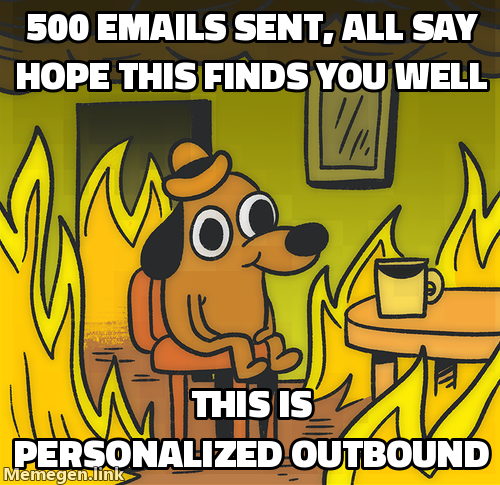 500 emails, zero signals, full confidence. The classic.
The Signal-Based Opener System
The core of cold email personalization at scale is a one-sentence hook built on a live business signal. The structure looks like this:
[Observed signal] + [Why it matters to them] + [Bridge to your offer]
For example: a company posts a job listing for a Head of Sales. That is a signal. It tells you they are building a revenue team. The hook writes itself: you noticed they are scaling their sales motion, and you help companies at that stage build pipeline before the new hire even ramps.
Signals that scale well include: hiring activity on job boards, funding rounds, product launches, recent LinkedIn posts by the prospect, new market entries, and technology installs. Each of these is machine-readable. You can pull them programmatically for hundreds of contacts per day using tools like Clay combined with Apollo or LinkedIn data.
The clay enrichment service is specifically designed to waterfall these signals across a list automatically, so the research step that used to take a human researcher several hours happens in minutes.
How AI Drafts the Hook (and Why a Human Still Approves)
Once a signal is attached to a contact, an AI layer reads it and writes a first line. The prompt constrains the output to a single sentence, grounded only in what was found. No invented facts, no generic filler.
The result sounds like: “Saw you just posted for an outbound SDR role in Amsterdam, which usually means pipeline is the constraint right now.”
That line is factual, specific, and relevant. A prospect reading it knows immediately that this email is not a blast.
The critical step that most automated systems skip is the human review gate. Every draft goes through a review before it sends. This is not optional. AI models occasionally hallucinate a detail or produce a line that is technically true but tonally off. A human reading the draft for 10 seconds catches that before it reaches a real inbox.
This is the model behind how outbound we build for clients operates: done-for-you cold email includes signal sourcing, AI drafting, and a human approval step on every message. The machine handles scale, the human handles judgment.
Building the Template That Wraps the Opener
The opener is the personalized layer. The rest of the email is a tight template, usually 60 to 90 words total, with a single clear call to action.
A strong BoF cold email template follows this structure:
- Personalized first line (the signal hook, one sentence)
- What you do and who it is for (one sentence, specific)
- One concrete outcome or mechanism, not a list of features (one sentence)
- A low-friction CTA: a question, not a calendar link forced on them
The subject line follows the same logic. It references the signal or the outcome, not the sender’s company name. Subject lines that work at scale tend to be five words or fewer and read like something a colleague would write.
For companies running outbound for professional services or SaaS, this structure holds across segments. The signal changes (a consulting firm might trigger on a new practice area announcement, a SaaS company on a funding round), but the template wrapping it stays stable.
Warming the Infrastructure Before You Scale
Personalized copy is wasted if emails land in spam. Before scaling to several hundred sends per day, you need dedicated sending domains with proper DNS records (SPF, DKIM, DMARC) and a warmup period of three to four weeks per domain.
A GDPR-compliant cold email agency handles this infrastructure setup as a baseline. Each domain sends a small volume of emails during warmup, building a sending reputation before live prospecting begins.
The combination of warm infrastructure and signal-based personalization is what separates outbound that books meetings from outbound that generates spam complaints.
What to Measure
Open rate is a vanity metric at scale because inbox providers increasingly block tracking pixels. The numbers that matter are reply rate (total replies divided by delivered), positive reply rate (replies that express interest, ask for more information, or request a meeting), and meeting booked rate.
A well-built signal-based system with human review should produce a positive reply rate worth tracking within the first two to three weeks of sending. If it does not, the signal choice or the template is the problem, not the volume.
For teams evaluating whether to build this in-house or use a service, the done-with-you outbound model lets you own the stack and the data while getting the system built correctly from the start.
Get the signal tier list in your inbox.
We rank signals from S to D to decide who gets a cold email and who does not. You get the list once. No follow-up emails.
Request received. The list lands in your inbox within 24 hours.
One more step: send the prepared request to [email protected]
FAQ
What is cold email personalization at scale?
It means generating a unique, research-backed opening line for every prospect in a list automatically, usually by pulling a live signal (job post, news, LinkedIn activity) and using an AI layer to write the hook. The rest of the email stays templated to keep quality consistent.
Does personalization actually improve cold email reply rates?
Relevant, specific personalization outperforms generic blasts. The gap narrows when the template itself is strong, but a genuinely relevant first line that references something the prospect just did converts better than a blank 'Hope this finds you well' opener.
How many personalized emails can one person send per day?
Manually, most people cap around 20 to 30 quality personalized emails per day. With a signal-based AI system feeding a warm-up domain infrastructure, the same person can review and approve several hundred, because the research and drafting happen automatically.
What signals work best for cold email openers?
Hiring signals (a new SDR role posted means they want pipeline), funding announcements, product launches, recent LinkedIn posts by the prospect, and tech stack changes all work well. They share a common trait: they reveal a current pain or priority the email can speak to.
Is personalized cold email GDPR compliant?
Personalizing a B2B email using publicly available professional data (LinkedIn, company site, job boards) is generally permitted under the legitimate interest basis in GDPR, provided you include an opt-out and do not process sensitive personal data. Always include an unsubscribe link.
What is the difference between personalization and customization in cold email?
Personalization references something specific to the individual prospect, like a post they wrote or a role they just hired for. Customization means swapping segment-level variables like industry or company size. Both matter, but personalization at the individual level drives the highest response.

Ahmet Faruk Yilmaz
Founder of Asphia. He builds and runs signal-based B2B outbound engines for lean teams, and has booked meetings with teams at companies across five markets. Writes about cold email, Clay, deliverability, and GTM engineering.
Want this run for you?
Get a free GTM analysis. We show you the exact engine we would build.
Get your free GTM analysis →