How Many Follow-Ups Is Too Many? Cold Email Sequence Length Benchmarks
June 1, 2026 · 5 min read · by Ahmet Faruk Yilmaz, Founder of Asphia
TL;DR
Most B2B cold email sequences perform best at 3 to 5 steps spaced 3 to 7 days apart. Beyond step 5, reply rates drop sharply and unsubscribe risk climbs. The exact number depends on your ICP, offer complexity, and how strong your signal targeting is at step one.
The most common mistake in cold outbound is not the first email. It is what happens after: either giving up after one touch, or sending eight follow-ups until a prospect reports you as spam.
The practical answer is 3 to 5 steps, spaced 3 to 7 days apart, where every step earns its place with a distinct angle. Anything beyond that requires a genuinely new signal or reason to reach out, not just persistence.
Why Sequence Length Matters More Than People Think
Every additional email in a sequence is a bet. You are betting that the incremental revenue from the replies you generate outweighs the unsubscribes, spam reports, and goodwill you spend.
The math changes based on your ICP. If you are reaching out to senior buyers at enterprise companies about a complex, high-value service, a 5-step sequence with thoughtful reframes can work well. They receive a lot of outbound, the decision process is long, and timing is genuinely unpredictable. If you are reaching out to small agency owners with a fast decision cycle, a 3-step sequence often outperforms a longer one because the buying trigger is either there or it is not.
What almost never works is length without differentiation. Step 2 that says “just following up” adds no value and erodes trust. Every step needs a reason to exist.
The Anatomy of a High-Performing Sequence
A well-structured 4-step sequence tends to look like this:
Step 1 is your opening move. It leads with a specific signal (a job posting, a recent hire, a product launch, a news mention) and connects it to a relevant outcome you can help with. This is where most of the work happens. If step one is not good, the rest of the sequence cannot save it.
Step 2 (3 to 4 days later) approaches from a different angle. Instead of repeating the same value proposition, it shifts the frame. If step 1 talked about speed of pipeline, step 2 might reference a specific objection you know your ICP has, or share a quick observation about how similar companies approach the problem.
Step 3 (5 to 7 days later) is shorter. One or two sentences, a direct question. At this point the prospect has seen your name twice. A brief, low-pressure message is more likely to get a reply than another paragraph.
Step 4 is the breakup. A light, honest note that says you will stop reaching out but wanted to make sure the timing was just off, not the fit. Breakup emails often generate the highest reply rate of the sequence because they create a low-stakes moment for the prospect to respond.
For teams running done-for-you cold email, the sequence architecture is part of what gets built before a single email goes out. Sequence logic matters as much as copy.
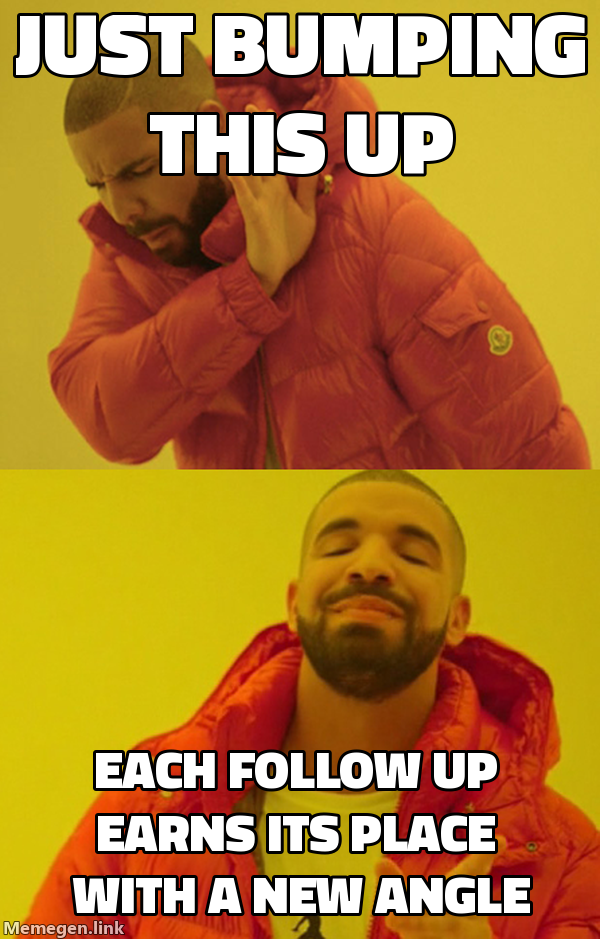 Every follow-up that says “just bumping this up” is a step that earns zero replies and spends goodwill you cannot get back.
Spacing: The Variable That Most People Rush
Compressed sequences feel aggressive. Three emails in four days reads as desperation, not diligence, and it gives spam filters more reasons to act.
Practical spacing for a 4-step sequence:
- Step 1 to Step 2: 3 days
- Step 2 to Step 3: 5 days
- Step 3 to Step 4: 7 days
Total sequence window: roughly 15 to 18 days. That is long enough to catch a prospect at different moments in their week, short enough to maintain continuity.
If you are running signal-triggered outreach through Clay enrichment, you have a natural advantage here. When step 1 references something that happened in the last 7 days, you can compress the spacing slightly because the relevance signal compensates for the shorter gap.
When to Go Shorter (and When Longer Is Justified)
Go shorter (2 to 3 steps) when your ICP has fast buying cycles, when you have a very specific transactional offer, or when you are targeting a segment where inbox fatigue is high (recruiters, agency owners, startup founders all receive heavy outbound volume).
Go longer (5 to 6 steps) when the deal is complex and the decision timeline is naturally long, when your offer requires education before it becomes relevant, or when you have genuinely distinct angles available for each step. In practice, most teams think they have enough angles for 6 steps and discover by step 4 that they are repeating themselves.
For B2B agencies running their own outbound, keeping sequences at 4 steps and investing more time in signal quality at step 1 almost always beats adding more steps to a generic sequence.
GDPR and Sequence Compliance
Every step in a sequence sent to EU contacts must include a clear opt-out mechanism. This is not optional. More practically, a well-placed opt-out reduces spam complaints because contacts who are not interested can exit cleanly rather than reporting you.
Threading all follow-ups under the original message also helps with compliance: the full context is visible, which satisfies transparency requirements under legitimate interest. For a detailed breakdown of compliant outbound structure, gdpr.eu covers the legitimate interest basis that most B2B cold email operates under.
If your outbound spans multiple markets, GDPR-compliant cold email setup is worth getting right before you scale, not after.
The Practical Starting Point
If you are not sure where to start, run a 4-step sequence with steps at days 0, 3, 8, and 15. Measure reply rates by step. If step 3 and step 4 generate near-zero replies across a meaningful sample, cut to 3 steps and reinvest that energy into better step 1 targeting. If step 4 is generating replies, test a step 5.
The sequence length question is ultimately an optimization problem, not a rule. Start with a defensible default, measure by step, and adjust based on what your specific ICP responds to.
Get the signal tier list in your inbox.
We rank signals from S to D to decide who gets a cold email and who does not. You get the list once. No follow-up emails.
Request received. The list lands in your inbox within 24 hours.
One more step: send the prepared request to [email protected]
FAQ
How many emails should a cold email sequence have?
For most B2B outreach, 3 to 5 steps is the practical sweet spot. The first email carries the most weight. Each follow-up should add a new angle or reframe the value, not just say 'bumping this up.' Sequences longer than 5 steps rarely generate proportional returns and increase unsubscribe risk.
How long should you wait between cold email follow-ups?
A common cadence is 3 days after step one, then 4 to 7 days between each subsequent step. Spacing too tight feels aggressive and triggers spam filters. Spacing too wide loses momentum. The goal is to stay in the prospect's peripheral awareness without becoming a nuisance.
What is the best time to send a cold email follow-up?
Tuesday through Thursday mornings in the recipient's local timezone consistently outperform Monday mornings and Friday afternoons. That said, signal-triggered emails (sent when a prospect posts a job or gets funding) can be effective at any time because the relevance overrides timing friction.
Should you use the same subject line for all follow-ups?
Threading follow-ups under the original subject line (Re: your original subject) keeps the conversation context visible and avoids triggering duplicate-subject filters. Some senders break the thread on step 4 or 5 with a fresh subject to get a new open, but this works best as a final breakup-style message.
When should you stop following up on cold email?
Stop after your final step and mark the contact for a re-engage window of 60 to 90 days. If a prospect opens multiple times but never replies, one personalized follow-up referencing a new signal (a job change, a news item) can restart the conversation. Never add someone back to an active sequence without a fresh angle.
Does a longer cold email sequence hurt deliverability?
It can. Long sequences mean more messages per contact, which increases the chance of spam complaints if the content feels generic. Keeping sequences tight and signal-targeted reduces complaint rates. GDPR-compliant sequences also include a clear opt-out in every step, which protects both deliverability and legal standing.

Ahmet Faruk Yilmaz
Founder of Asphia. He builds and runs signal-based B2B outbound engines for lean teams, and has booked meetings with teams at companies across five markets. Writes about cold email, Clay, deliverability, and GTM engineering.
Want this run for you?
Get a free GTM analysis. We show you the exact engine we would build.
Get your free GTM analysis →