Signal-Based Cold Email: How to Write Copy That References What Prospects Actually Care About Right Now
January 2, 2026 · 5 min read · by Ahmet Faruk Yilmaz, Founder of Asphia
TL;DR
Signal-based cold email uses real, timely triggers (a job change, a funding round, a hiring spike) as the opening hook. Instead of guessing at pain points, you reference something the prospect visibly cares about right now. The result is a shorter, more relevant email that earns replies because it proves you did your homework.
Signal-based cold email is the practice of opening every outreach message with a real, timely trigger specific to that prospect, rather than a generic pain-point claim. Done well, it turns cold outreach into something that reads more like a well-timed introduction.
Why Generic Cold Email Fails (and Signals Fix It)
Most cold email fails at the first sentence. “I help companies like yours improve their sales process” is a claim the reader has seen two hundred times. There is no reason to keep reading.
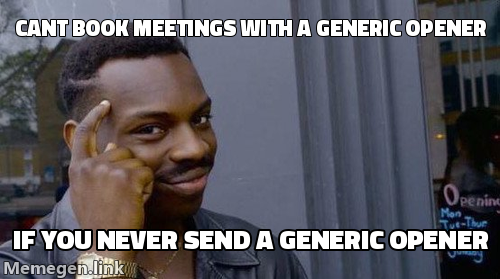 Can’t lose what you never risked sending.
A signal changes the equation. When your opening line references something the prospect published, announced, or did in the last thirty days, the implicit message is: “I am not blasting you. I noticed something specific, and I am reaching out because of it.” That earns attention.
The best signals share a few properties. They are recent (within four to six weeks), publicly visible (no grey-area data sources), and connected to a real business problem your service addresses. A company posting five SDR roles is a signal for a fractional SDR service. A SaaS startup announcing a Series A is a signal for a lead generation for B2B SaaS conversation. A consulting firm that just hired a Head of Growth is a signal for a lead generation for consulting firms pitch.
The Four Signal Categories Worth Building Around
Hiring signals. Job postings reveal budget, priorities, and gaps. A company hiring a Head of RevOps is thinking about outbound infrastructure. A company posting for five BDRs is about to spend money on sales capacity you might replace or augment.
Funding signals. A closed round means a mandate to grow. The window between announcement and “we have a process” is narrow, which is exactly why timeliness matters. Your email arriving a week after the announcement beats one arriving two months later.
Leadership changes. A new VP of Sales, CMO, or CEO is re-evaluating every vendor in their stack. They have no loyalty to the incumbent and are actively looking for tools that fit their playbook.
Technology and intent signals. If a prospect recently added a CRM, a marketing automation tool, or a chatbot (detectable via tools like BuiltWith or technographic data in Clay), you know something about where they are in their growth stage and what adjacent problems they likely have.
How to Write the Signal Hook
The signal goes in the first sentence, full stop. Do not bury it after a long setup. The structure is:
- Name the signal (one clause).
- Connect it to the problem (one sentence).
- State the outcome you deliver (one sentence).
- Ask one low-friction question (one sentence).
Example using a hiring signal: “Saw you are hiring three SDRs right now. Building that team takes four to six months to ramp, and most founders we talk to find the first ninety days are expensive in both time and missed pipeline. We help [company type] set up an AI-assisted outbound engine that runs in parallel while the team ramps. Worth a fifteen-minute call this week?”
That is 60 words. It references something real. It connects to a genuine concern. It offers a concrete outcome. It ends with a question the prospect can answer in one word.
Infrastructure That Makes Signal-Based Email Scalable
Writing one signal-based email by hand is easy. Writing two hundred per week without the copy becoming generic is an infrastructure problem.
The standard stack for this: a Clay enrichment service layer that pulls signals from multiple sources and populates custom variables per contact, feeding into a sequencer that renders those variables into each send. Every email looks handwritten because the signal data is genuinely unique to each prospect.
At Asphia, we build this as either a done-for-you cold email system we operate on your behalf or a done-with-you outbound build that lives in your own stack. Either way, a human reviews every email before it sends. Automation handles the data assembly; judgment stays with a person.
What to Avoid
Fake signals. Do not invent a reason for reaching out. If your signal is “I noticed your website” or “I was researching companies in your space,” it reads as filler. Prospects know the difference.
Irrelevant signals. A signal only works if it connects logically to your offer. Mentioning that a prospect recently spoke at a conference is flattering but meaningless unless your service helps speakers, event organisers, or the specific audience that attends those events.
Stale signals. A funding round from fourteen months ago is not a trigger. A leadership change from two years ago is not a hook. Timeliness is what makes a signal feel like genuine context rather than research-theatre.
For a broader look at how to build outbound that avoids spam filters while staying personal, see our guide on AI cold email that avoids spam. If you are evaluating whether to hire an SDR or automate the function, the breakdown in how to book meetings without an SDR covers the tradeoffs directly.
Signal-based cold email is not a trick. It is what good outreach has always looked like: a relevant message sent to the right person at the right moment, with a clear reason for reaching out. The difference now is that the infrastructure exists to do it at scale without sacrificing the relevance that makes it work.
Get the signal tier list in your inbox.
We rank signals from S to D to decide who gets a cold email and who does not. You get the list once. No follow-up emails.
Request received. The list lands in your inbox within 24 hours.
One more step: send the prepared request to [email protected]
FAQ
What is a signal in cold email outreach?
A signal is any observable, timely event tied to a prospect or their company, such as a new hire, a funding announcement, a job posting, or a technology change. Using a signal as your email hook shows the prospect you are reaching out because something specific is happening for them, not because you blasted a list.
How do tools like Clay help with signal-based cold email?
Clay pulls real-time data from dozens of sources (Apollo, LinkedIn, Crunchbase, job boards, and more) and lets you build conditional logic around those signals. You can automatically route prospects into different sequences based on whether they are hiring SDRs, just raised a round, or recently switched CRM platforms, so each email references the right trigger.
What signals produce the best cold email reply rates?
Signals tied to intent and urgency tend to perform strongest: active job postings for a role your service replaces, a recent funding event signalling budget, a leadership change bringing in someone with a known buying history, or a competitor mention in a press release. The more specific and recent the signal, the more the email reads like a warm introduction.
How long should a signal-based cold email be?
Short. The signal does the work of establishing relevance, so you do not need a long warm-up. One sentence referencing the trigger, one sentence connecting it to the problem you solve, one sentence on the outcome you deliver, and a low-friction call to action. Aim for under 80 words in the body.
Is signal-based outreach GDPR compliant?
Yes, if you stick to publicly available signals (company news, LinkedIn activity, job postings) and your outreach has a legitimate interest basis with a clear opt-out. Avoid using signals derived from personal browsing data or closed platforms without consent. A GDPR-native approach builds sequences around professional, publicly visible behaviour only.
Can I do signal-based cold email without a large team?
Yes. With the right data infrastructure (a Clay-style enrichment layer feeding into a sequencer like Smartlead or Manyreach) one person can run hundreds of personalised sends per week. The key is building the signal logic once and letting the machine apply it at scale, with a human approval gate before anything goes out.

Ahmet Faruk Yilmaz
Founder of Asphia. He builds and runs signal-based B2B outbound engines for lean teams, and has booked meetings with teams at companies across five markets. Writes about cold email, Clay, deliverability, and GTM engineering.
Want this run for you?
Get a free GTM analysis. We show you the exact engine we would build.
Get your free GTM analysis →